
Mindful Thanksgiving: Escaping the Celebration Trap Without Missing the Joy

Thanksgiving is a favorite holiday for many people. It brings together family, traditions, laughter, gratitude, and connection. Yet, it is also one of the most common times my clients find themselves saying, “I was so happy... so why did I eat until I felt miserable?”
If you've ever left the Thanksgiving table feeling physically stuffed, mentally defeated, and wondering where your good intentions disappeared to, you are not alone. In fact, you may have fallen into what I call, in my recent book, Food Isn't The Problem, the Celebration Trap.

The Celebration Trap
Most people think emotional eating only happens when we're stressed, sad, or anxious. But some of the biggest overeating episodes happen during our happiest moments.
Think about it. Since childhood, celebrations revolve around food. Birthday cake, holiday feasts, Christmas cookies, graduation dinners, wedding receptions. We learn early that food equals love, connection, comfort, and joy. By adulthood, those pathways are deeply wired into our brains.
The problem isn't the celebration itself. The problem is that we often become so immersed in the joy of the experience that we completely lose touch with our body's signals. We stop paying attention to hunger, fullness, or satisfaction and start eating on autopilot.
The "I Deserve This" Mindset
One of the most common thoughts that appears at holiday gatherings is:
"I've worked so hard. I deserve this."
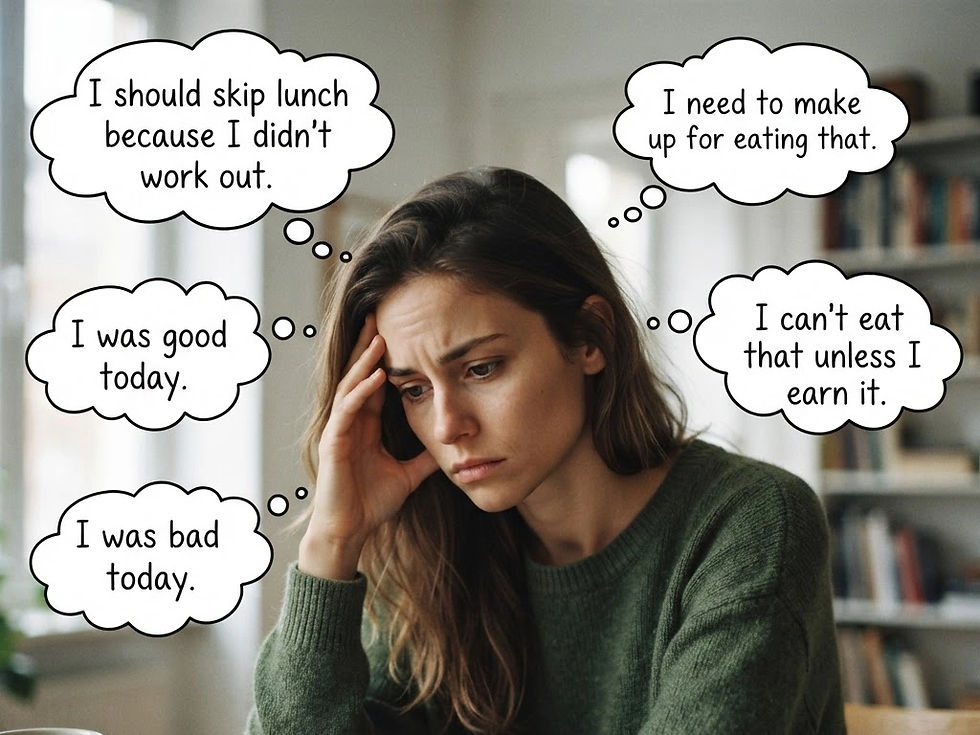
At first glance, that sounds harmless. But often, it's not really about celebrating. It's about rewarding ourselves after periods of restriction or stress. It is applying the burn-to-earn mindset.
When we approach Thanksgiving with a scarcity mindset, we unconsciously give ourselves permission to eat everything because tomorrow we'll "get back on track." Instead of enjoying the meal, we swing into an all-or-nothing mentality that leaves us uncomfortable, bloated, and frustrated the next day.
A true reward shouldn't leave you feeling punished afterward.
Remember What You're Really Celebrating
This Thanksgiving, I encourage you to ask a simple question:
"What am I actually celebrating?"
Is it the pumpkin pie?
Or is it the grandchild sitting beside you?
Is it the stuffing?
Or is it the opportunity to gather around a table with people you love?
Food is part of the experience, but it is not the experience. Or at least it doesn't have to be.
When we focus on the people, stories, gratitude, and connection, we naturally create space to enjoy food without making it the centerpiece of our joy.
Watch Out for the Conversation Blackout
Have you ever looked down and realized your plate was empty, but you barely remember eating? I call this the Conversation Blackout.
During meaningful conversations, laughter, and fellowship, we often eat mindlessly. Our fork moves automatically while our attention is elsewhere. Before we know it, we've consumed far more than our bodies actually wanted.
This Thanksgiving, try these simple mindfulness guardrails:
Start with smaller portions.
Put your fork down while someone else is speaking.
Take a breath between bites.
Check in with your body periodically and ask, "Am I still enjoying this, or am I just continuing because it's there?"
Mindfulness doesn't take away the joy. It enhances it.
Navigating Food Pushers with Grace
Nearly every family has one.
The aunt who insists on a second helping. The grandmother who lovingly asks if you've tried everything. The cousin who says, "Come on, it's Thanksgiving!"
Remember: most food pushers aren't trying to sabotage you. Often, they are expressing love through food. For generations, preparing a large meal has symbolized care, provision, and generosity.
You can accept the love without overfilling your plate.
Try saying:
"This looks absolutely amazing."
"The aroma is divine; what spices did you use?"
"Thank you for making this."
"The flavors are incredible."
You can honor the person without ignoring your body's needs.

Create New Traditions
One reason holidays become food-centered is that food is often the only activity.
What if Thanksgiving included more opportunities for connection?
Consider creating traditions like:
A family walk after the meal
A gratitude-sharing circle
Board games or puzzles
A neighborhood Turkey Trot
Family storytelling sessions
A gratitude table runner where everyone writes what they're thankful for each year
When connection becomes the focus, food naturally returns to its proper role. Nourishment and fuel.
A Thanksgiving Pause
Before reaching for seconds, try this simple mindful pause:
Take one deep breath.
Ask yourself, "Am I physically hungry?"
Ask, "What am I feeling right now?"
Ask, "Am I feeding my body, or am I trying to hold onto this moment?"
There is no wrong answer.
The goal is simply awareness for a mindful next step.
The Gift of Enough
One of the greatest lessons I've learned is that fullness and satisfaction are not the same thing.
You do not have to leave Thanksgiving physically uncomfortable to prove you had a wonderful day. You do not need a food coma to validate the celebration.
Joy is not measured by how much food you eat.
This Thanksgiving, give yourself permission to leave the table physically comfortable and emotionally full.
Because at the end of the day, your family won't remember how many servings of mashed potatoes you had. They'll remember the laughter, the stories, the hugs, and the time spent together.
And that is what you're truly hungry for.


Comments